Sunday, December 18, 2011

Paper 5


When I first wrote my Paper #3, I was extremely pleased with how it came out. After seeing the comments that you and my peer left me, I began to realize that I needed to revise my work to improve the structure. I believe that my first copy didn’t exactly get my point off as directly as I intended, therefore I strived to simplify and reduce. I added some words around the paper to help with the flow of my thoughts and added in more detailed sentences to bring up my point better.
To improve the quality of my paper I expanded on my strengths and improved my weaknesses. To fix my weaknesses, I removed unnecessary statements and useless information. Then, I removed the downfall of man idea and centralized the argument of isolation from society and losing our cultural roots. By removing this theory, I was able to present my ideas clearly and concisely. I centralized my argument and established the connection between paragraphs better and revised all of my weaknesses.
I will now explain how I expanded on my strengths in the paper. I believe to make the strengths of this paper clearer, I had to add in more details and simplify what sounded confusing. In doing this, I made my paper sound much better and made the paper flow much better when reading it. Another thing that was done to make the paper stronger was that I removed complex sentences and created a stronger connection between each paragraph. By doing so, I bridged my ideas thoroughly and clearly. I feel my strengths were improved greatly and expressed my argument efficiently. By improving my weaknesses and expanding my strengths, I feel I have improved the quality of my Paper #3 and made a much better, Paper #5.

Technology has been all around us ever since the beginning of time, whether it has been basic or advanced. With technology, we have been able to accomplish many things that were thought unimaginable. However, the article, “Disconnected Urbanism” and my New Yorker covers both suggest otherwise about the use of technology. Both argue that technology has become a form of isolation that has disconnected us from our urban life and will end up bringing us down. In looking at these covers and reading the article, the artists and author both believe that the dependence on technology can lead to our society becoming locked away from its traditional and cultural urban roots that cause it to thrive.
I left the first two sentences as is because I felt that they made the introduction strong and portrayed what I wanted to say in my argument for this paper. The next sentence was changed by removing words that were not needed. The fourth sentence was completely changed and simplified. I took out unnecessary words and changed up the way the sentence flowed. The last sentence was not changed because I like how the sentence sums intro and brings my topic to life.
In the article, "Disconnected Urbanism", Goldberger believes that technology has grown to become the reason why people are not connected to the world that is around them. This idea is presented clearly in this quote from the article: "When you walk along the street talking on a cell phone, you are not on the street sharing the communal experience of urban life. You are in some other place—someplace at the other end of your phone conversation.” When you are on the phone and walking around, you are focused on what conversation you're having instead of the sidewalk that you are walking on, therefore you are isolated from society. Another part of the article that supports the idea of being isolated from society is: "You are either on the phone or carrying one, and the moment it rings you will be transported out of real space into a virtual realm." Once the phone rings, you yourself disconnect from the people and events going on around you. While you are physically in the place that you are in, with a phone you are allowing yourself to become transported from the physical reality into a place of technological isolation, of just you and your cell phone. "Disconnected Urbanism" is the written form of how technology disconnects us from the urban world and the New Yorker covers are the visual representation of this.
I left the first few sentences the same, but added the therefore you are isolated from society to connect it to the next sentence. I also removed the sentences before and after the when you are on the phone and walking around statement because they simply just took up space and repeated already known information. I left the next sentence the same because it connected to the new sentence that was added to it. I changed the next sentence and removed confusing statements from it so that the paragraph could be more cohesive. The last sentence remained the same because I believe that it leads up to the New Yorker paragraphs perfectly.
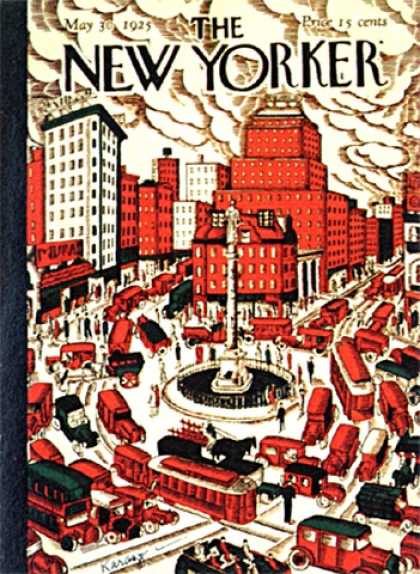
In the New Yorker cover from May 30th, 1925, there is a town square with nothing, but cars all around with people who seemed to be trapped in the middle with no way to get out of the place that they are in. This cover shows how technology was one of the leading factors of people being disconnected from the urban world around them in the early 1900s. The people who are inside their cars are disconnected from society because they are in different realms of the same setting, just as people on their cell phones would be distracted from the life around them. These people are not experiencing the same atmosphere as those living around them. However, the people in the cars are also causing the people walking around to be disconnected from the society by causing a blockade from the urban life around them. The cars all around are leaving the people no choice, but to be isolated from the urban life around them.
In this paragraph, I left the first sentence the same because it explains the cover as what it simply is. However, I removed the second sentence because it didn’t really fit with the way the paragraph was flowing and could not be changed to fit into the paragraph. In the next sentence I added early to the year 1900, so that it could be identified as to what time period was being talked about. The next two sentences remained the same because they fit the way that paragraph was going and strengthened the idea of this paragraph. The next sentence was changed by removing the “because with the cars being all around” statement because it just made the sentence more complex than what it had to be. The last sentence was unchanged because it ended this paragraph how I felt it should be concluded.
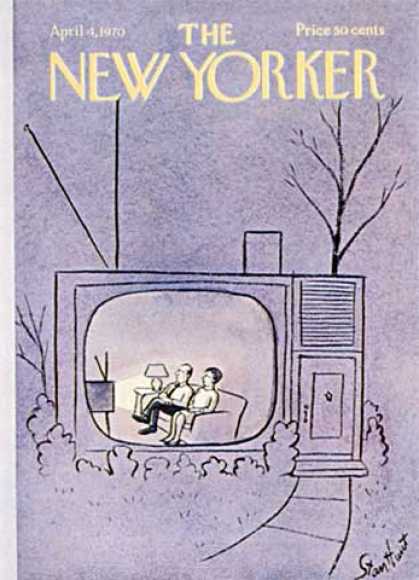
Cars isolated people from the urban life that was going on around them outside of their vehicles and caused a blockade from society by making people feel as if they needed to purchase them. However, once TVs became available in the 1970s isolation from society started to become more and more apparent. In the second cover, we see that through TVs people began to isolate themselves by choice by staying at home watching TV rather than going out and experiencing life. In this cover, we see how people decide to become isolated with technology by their own choice. In the first cover, the people walking around had no choice, but to be stuck in the place they were in since all the cars were around them and did not allow them to go anywhere else. The cover brings up the point that with technology constantly around us we allow ourselves to not be connected to the world that is going on around us. In the cover, the couple inside of the TV watching a TV represents how if we allow ourselves to become trapped and caught up with technology, we will end up shutting ourselves out of society and life all around us. The TV is causing the couple to become trapped inside a virtual world and become isolated from the urban life by choice.
For this paragraph, I connected the first sentence to the ending of the third paragraph much more clearly and changed some of the wording of the sentence around to make it flow much better. I also changed around some of the words and the first sentence as well as divided it into two different sentences. The next few sentences remained the same because they explained what the cover and my argument was trying to portray and did not need to be changed around at all to fit the paragraph. The second to last sentence was changed around to be simpler and portray my idea in a coherent way. The last sentence was not changed because it showed the difference of time periods and ended this paragraph clearly.
TVs caused people to become isolated from society through their own decision, but in general any form of technology that we decide to use can cause us to become isolated. In the third cover Ascent of Man from May 14, 2007, we do not see one specific form of technology, rather the history of technology and evolution of it with mankind. This cover illustrates the evolution of man with technology in each time period. As time went by and man became more advanced so did the technology around him, as we can see from each different object that they are standing on. In the beginning we can see a monkey standing on top of rocks and as time goes by, each man’s physical features and clothing changes, as well as the platform that they are standing on. From this we see how man has always advanced and strived to perfect technology to help themselves, no matter what the problem may have been. In each section of the time period, we see one man who is up top and isolated from anyone else around them. From this, the cover is trying to tell us that technology may always be beneficial to us and help us get where we want to go, but in the end depending on technology will only lead us to become isolated from the society around us and lead to us being alone with no technology as we can see at the end of the cover with the man falling over. The cover creates the sense that technology will always be the driving force of society, but that it will eventually destroy the society around us. Technology has built up society since we see the people going upwards, but that there’s a certain point where technology will not always be there and will lead us to go downwards with no way back up, like the broken escalators at the end of the cover. The cover supports the idea that technology has disconnected us from society and will lead to man becoming so focused on improvement that we’ll end up causing more problems than solutions by wanting to become this advanced technological society.
I established the connection with the fourth paragraph’s last sentence by fixing the first sentence of this paragraph and removed the idea of the downfall of man from the paragraph. I changed the “them” in the middle of the next sentence and added him so that the sentence could sound clearer. I added in a new sentence with examples of what the cover portrays and how it supports the argument that I have in this paper. I removed the comma from the next sentence because it did not have to be placed there. I changed the next sentence by removing the downfall idea and changing it to fit the isolation theme that is present throughout the whole paper. The next sentence was not changed because it fit with what the paragraph has stated. A comma was added after the up and before the like in the statement “will lead us to go downwards with no way back up.” The next sentence was changed around so that it could be simpler and fit in with the theme better. The last sentence "This cover illustrates the evolution of man with technology in each time period.” was moved to become the third sentence because it explains what the cover is about and fits better at the beginning of the paragraph.
The covers that I have chosen all represent the theme of isolation from technology. Eventually we will fall behind our innovations, and we will rely heavily on money and many various other resources just to simply keep up and stay connected with society and other factors. If we continue to constantly depend on technology we will end up becoming disconnected from the urban life around us due to us not realizing that our cultural roots are being taken away from us with the abundance of technology. If we continue to depend on technology we will all become people who are lost in a virtual world with no way out.
The first sentence was not changed because it summarizes the common theme that is present from the covers. I added a few words to the paragraph to improve the structure of the language. I removed the sentence “As our technology continues to advance… because it seemed to fit more with downfall theme rather than the isolation that I have in the paper. The next sentence was changed and stated what technology is doing to our life now with how it is taking us away from our cultural roots. The last sentence was changed so that it could fit all people rather than just one person.

Monday, December 12, 2011

Final Essay

As Americans have grown throughout time, their connection to the civil and lively neighborhoods that used to exist have become disconnected and damaged. We used to live in a time where the design of our buildings and setting of our towns were similar, connected to us, and made us feel as if we were one with society. Kunstler believes that we have become blind to the kind of changes that we have made over time. He argues that we now only believe in the commercial and industrial life and have now become consumers rather than citizens of the towns that we live in. While reading his argument, and viewing the New Yorker covers, we can visualize and understand how we have become disconnected from the city life and attached to the suburban culture that now exists.

In Kunstler’s argument, we can understand how city life has changed since our cities were first built and made. We now only focus on what people want to be entertained by and what makes our life easier, instead of the places that just allowed to stay connected to our city and enjoy what the city life had to offer us. Kunstler argues that we do not notice what is around us and how things have changed. We do not see that the design of our cities now is nothing compared to what once existed. In his argument, Kunstler states that, “we ceased to speak of ourselves as citizens and labeled ourselves consumers.” What this means now, is that instead of living and thriving in the city that we live in, we expect the city to give to us and make us feel good. With this, we are taking away from the city and stripping it of its roots, rather than building it up and brining back what once was our civil and lively city.

The New Yorker covers each show a significant way of how time has changed from the past to the present. In each of the covers we see a different time period with a different design, yet they all have a common simple underlying message in each of them: how the design of our city has lead us to become disconnected and focused on an urban way of living. In the first cover from 1936, we see many people bunched up with no way of getting out of the elevator in which they are in. This cover shows how as our city becomes more advanced and technical, we will always be stuck fighting for a way to get out of what we have brought ourselves into by trying to become more urban. The cover shows how becoming more complex can lead to future difficulties and conflict amongst the people around us because of our want to benefit from our city rather than making our city a better place. In the second cover from 1970, we see how the city design has changed and become more complex. This is what Kunstler is arguing about in his passage. We are changing how our city looks and making it more appealing to ourselves rather than leaving the traditional look that used to exist. In the next cover from 1974, we see the design change of the city. In it we can see a tall building with large glass windows and other buildings being reflected in the windows. The buildings have now become taller and more complex rather than simple and small like they used to be. This proves what Kunstler is saying with the way that our city is now looking. We have stripped the city of its original look and have made it an advanced urban place for us to live in.

The next cover from 2001 shows a woman who seems to be trying to sell an apartment to a couple. What seems to have captured the couple is the great view of the city and how the buildings look. In this cover, the idea of urban living is now apparent and satisfying to people. In the cover, we do not see anything, but tall buildings with large windows, this shows how our city has now become this large display for people to enjoy more rather than to live in. If we continue to make these decisions in making a city that appeals to the eye and brings us enjoyment, we will lose the connection that we have to the city like the cover from 2007 shows. We will end becoming people who just wander the city aimlessly with nothing but tall buildings trapping us inside of this “ideal” place.

As time has gone by, our city has changed drastically and has lost the appeal that it once had. We have become a society that is focused on living an urban life that has no connection to the city life that we once had. As our population developed with our city, we added many additions while also accepting different and unique influences. Although only some of the original city we live in today still exists, it is clear that with urbanization, we have not only grown from what we once were, but separated ourselves from it too.

Sunday, December 4, 2011

Paper #4- Peer Review

In this paper, the thesis presented by the writer is that technology was a way of connecting people and bringing them together. However, now technology is becoming a way to bring people apart. The central theme in this paper is the concept of travel and how technology has grown from benefitting groups of people early on in time, to now becoming a way to benefit one’s self. The paper is about the advancement of technology from being a connector of societies and cultures to now becoming a way to bring about individual advancement. In it, the concept of technology and how it affects us in our current location is stressed greatly.

This writer uses good language and has good ideas. However, I feel as if his ideas could be expanded on with great detail, as seen in this quote: “This cover explores the use of technology to connect people on a wide scale.” I believe that the writer should analyze the cover more thoroughly and provide details that support his statements. “Individualism ties into this cover with the use of the campers, but the people are still connected with society and interacting with each other.” The writer needs to use more evidence from his cover and he should re-evaluate his choice of words. The last cover has great potential to have ideas to be expanded on but as seen here: “People use the subway to travel to and from work, meetings, home etc… Once in the carts each person becomes isolated and they do not participate in conversation,” the writer needs to provide more description. The conclusion: “On the other hand, cell phones have been connecting people but also have been causing a great deal of isolation. For the most part this technology has helped make our nation come together but also made isolation more present,” presents separate ideas rather than tying the entire essay together and relating it directly to the thesis. Lastly I believe the writer should revise the essay as I have noticed a few small grammatical mistakes.

Overall you should revise your essay by correcting the simple grammatical mistakes shown in the essay. You should analyze your covers and expand on them with great details. Ask yourself why often, and if your answer isn’t already written in your essay, than add the answer. By expanding what is in your mind, you are expressing your ideas and bringing them to life. By doing so, you are providing the reader with some sort of a better understanding of what you are trying to show in your essay. I found the essay interesting, but it has the potential to be better.

Monday, November 28, 2011

Paper #3

Technology has been all around us ever since the beginning of time, whether it has been basic or advanced. With technology, we have been able to accomplish many things that were thought unimaginable. However, in the article, “Disconnected Urbanism” and with my New Yorker covers they both suggest otherwise about the use of technology. In the article, technology is talked about as being a negative factor and in my covers, technology is portrayed as a form of isolation that can take us away from our urban life and become our downfall in the end. In looking at these covers and reading the article, the artists and author both believe that the dependence on technology can lead to our society becoming locked away from its traditional and cultural urban roots that cause it to thrive.

In the article, "Disconnected Urbanism", Goldberger believes that technology has grown to become the reason why people are not connected to the world that is around them. This idea is presented clearly in this quote from the article: "When you walk along the street talking on a cell phone, you are not on the street sharing the communal experience of urban life. You are in some other place—someplace at the other end of your phone conversation." This quote shows how being on the phone, while being in one place brings you to another world in a way. When you are on the phone and walking around, you are focused on what conversation you're having instead of the sidewalk that you are walking on. This presents the idea of being isolated from society, in the sense that you are trapped in your own world of cellular conversation, instead of the urban life that is going on around you. Another part of the article that supports the idea of being isolated from society is: "You are either on the phone or carrying one, and the moment it rings you will be transported out of real space into a virtual realm." Once the phone rings, you yourself disconnects from the people and events going on around you. Instead of being in the place that you are in, with a phone you are allowing yourself to become transported from reality into a place of isolation, of just you and your cell phone. "Disconnected Urbanism" is the written form of how technology disconnects us from the urban world and the New Yorker covers are the visual representation of this.

In the New Yorker cover from May 30th, 1925, there is a town square with nothing, but cars all around with people who seemed to be trapped in the middle with no way to get out of the place that they are in. With this, we see how technology can leave people with no way of getting out of the chaos that technology can cause. This cover shows how technology was one of the leading factors of people being disconnected from the urban world around them in the 1900s. The people who are inside their cars are disconnected from society because they are in different realms of the same setting, just as people on their cell phones would be distracted from the life around them. These people are not experiencing the same atmosphere as those living around them. However, the people in the cars are also causing the people walking around to be disconnected from the society because with the cars being all around, it causes a blockade from the urban life around them. The cars all around are leaving the people no choice, but to be isolated from the urban life around them.

Cars caused a blockade from society and made people feel as if they needed to get them, but once TVs became available in the 1970s isolation from society started to become more and more apparent. In the second cover, we see that through TVs people began to isolate themselves by choice by staying at home watching TV rather than going out and experiencing life. In this cover, we see how people decide to become isolated with technology by their own choice. In the first cover, the people walking around had no choice, but to be stuck in the place they were in since all the cars were around them and did not allow them to go anywhere else. The cover brings up the point that with technology constantly around us we allow ourselves to not be connected to the world that is going on around us. In the cover, the couple inside of the TV watching a TV is a representation of how if we allow ourselves to become caught up and trapped in the technology around us, we will end up becoming disconnected from society and life all around us. The TV is causing the couple to become trapped inside a virtual world and become isolated from the urban life by choice.

TVs caused people to become isolated from society, but in general any form of technology can cause us to become isolated and eventually lead to our downfall from trying to advance so much at every time in life. In the third cover Ascent of Man from May 14, 2007, we do not see one specific form of technology, rather the history of technology and evolution of it with mankind. In it, is the beginning of time with technology from the time of the caveman up until the modern age of man. As time went by and man became more advanced so did the technology around them, as we can see from each different object that they are standing on. From this we see how man, has always advanced and strived to perfect technology to help themselves, no matter what the problem may have been. In each section of the time period, we see one man who is up top and isolated from anyone else around them. From this, the cover is trying to tell us that technology may always be beneficial to us and help us get where we want to go, but in the end depending on technology will only lead to our downfall as we can see at the end of the cover with the man falling over. The cover creates the sense that technology will always be the driving force of society, but that it will eventually destroy the society around us. Technology has built up society since we see the people going upwards, but that there’s a certain point where technology will not always be there and will lead us to go downwards with no way back up like the broken escalators at the end of the cover. The cover supports the idea that technology has disconnected us from society and will lead to man becoming so focused on improvement that there will be no way to fix the problems that they have caused by wanting to become this advanced technological society. This cover illustrates the evolution of man with technology in each time period.

The covers that I have chosen all represent the theme of isolation from technology. As our technology continues to advance, we are struggling to keep up. Eventually we will fall behind our innovations, and we will rely on money and many other resources just to simply keep up and stay connected with society and others. If we continue to depend on technology we will end up becoming disconnected from the urban life around us and become a person who is stuck in a virtual world with no way out.

Sunday, November 27, 2011

Paper #3- 3rd Draft

Technology has been all around us ever since the beginning of time, whether it has been basic or advanced. With technology, we have been able to accomplish many things that were thought unimaginable. However, in the article, “Disconnected Urbanism” and with my New Yorker covers they both suggest otherwise about the use of technology. In the article, technology is talked about as being a negative factor and in my covers, technology is portrayed as a form of isolation that can take us away from our urban life and become our downfall in the end. In looking at these covers and reading the article, the artists and author both believe that the dependence on technology can lead to our society becoming locked away from its traditional and cultural urban roots that cause it to thrive.

In the article, "Disconnected Urbanism", Goldberger believes that technology has grown to become the reason why people are not connected to the world that is around them. This idea is presented clearly in this quote from the article: "When you walk along the street talking on a cell phone, you are not on the street sharing the communal experience of urban life. You are in some other place—someplace at the other end of your phone conversation." This quote shows how being on the phone, while being in one place brings you to another world in a way. When you are on the phone and walking around, you are focused on what conversation you're having instead of the sidewalk that you are walking on. This presents the idea of being isolated from society, in the sense that you are trapped in your own world of cellular conversation, instead of the urban life that is going on around you. Another part of the article that supports the idea of being isolated from society is: "You are either on the phone or carrying one, and the moment it rings you will be transported out of real space into a virtual realm." Once the phone rings, you yourself disconnects from the people and events going on around you. Instead of being in the place that you are in, with a phone you are allowing yourself to become transported from reality into a place of isolation, of just you and your cell phone. "Disconnected Urbanism" is the written form of how technology disconnects us from the urban world and the New Yorker covers are the visual representation of this.

In the New Yorker cover from May 30th, 1925, there is a town square with nothing, but cars all around with people who seemed to be trapped in the middle with no way to get out of the place that they are in. With this, we see how technology can leave people with no way of getting out of the chaos that technology can cause. This cover shows how technology was one of the leading factors of people being disconnected from the urban world around them in the 1900s. The people who are inside their cars are disconnected from society because they are in different realms of the same setting, just as people on their cell phones would be distracted from the life around them. These people are not experiencing the same atmosphere as those living around them. However, the people in the cars are also causing the people walking around to be disconnected from the society because with the cars being all around, it causes a blockade from the urban life around them. The cars all around are leaving the people no choice, but to be isolated from the urban life around them.

Cars caused a blockade from society and made people feel as if they needed to get them, but once TVs became available in the 1970s isolation from society started to become more and more apparent. In the second cover, we see that through TVs people began to isolate themselves by choice by staying at home watching TV rather than going out and experiencing life. In this cover, we see how people decide to become isolated with technology by their own choice. In the first cover, the people walking around had no choice, but to be stuck in the place they were in since all the cars were around them and did not allow them to go anywhere else. The cover brings up the point that with technology constantly around us we allow ourselves to not be connected to the world that is going on around us. In the cover, the couple inside of the TV watching a TV, is a representation of how if we allow ourselves to become caught up and trapped in the technology around us, we will end up becoming disconnected from society and life all around us. The TV is causing the couple to become trapped inside a virtual world and become isolated from the urban life by choice.

TVs caused people to become isolated from society, but in general any form of technology can cause us to become isolated and eventually lead to our downfall from trying to advance so much at every time in life. In the third cover Ascent of Man from May 14, 2007, we do not see one specific form of technology, rather the history of technology and evolution of it with mankind. In it, is the beginning of time with technology always existing no matter how basic it was such as, rocks, trees, and grass. From this we see how man, has always advanced and strived to perfect technology to help themselves, no matter what the problem may have been. In each section of the time period, we see one man who is up top and isolated from anyone else around them. From this, the cover is trying to tell us that technology may always be beneficial to us and help us get where we want to go, but in the end depending on technology will only lead to our downfall as we can see at the end of the cover with the man falling over. The cover creates the sense that technology will always be the driving force of society, but that it will eventually destroy the society around us. Technology has built up society since we see the people going upwards, but that there’s a certain point where technology will not always be there and will lead us to go downwards with no way back up like the broken escalators at the end of the cover. The cover supports the idea that technology has disconnected us from society and will lead to man becoming so focused on improvement that there will be no way to fix the problems that they have caused by wanting to become this advanced technological society. This cover illustrates the evolution of man with technology in each time period.

The covers that I have chosen all represent the theme of isolation from technology. As our technology continues to advance, we are struggling to keep up. Eventually we will fall behind our innovations, and we will rely on money and many other resources just to simply keep up and stay connected with society and others. If we continue to depend on technology we will end up becoming disconnected from the urban life around us and become a person who is stuck in a virtual world with no way out.

Sunday, November 20, 2011

Paper #3- 2nd Draft

Technology has been all around us ever since the beginning of time, whether it has been basic or advanced. With technology, we have been able to accomplish many things that were thought of to be unimaginable. Technology has been a major factor of dependence in our lives and has benefited our lives greatly, however, in the article, “Disconnected Urbanism” and with my New Yorker covers they both suggest otherwise about the use of technology. In the article, technology is talked about as being a negative factor and in my covers, technology is portrayed as a form of isolation that can take us away from our urban life and become our downfall in the end. In looking at these covers and reading the article, you can see that the artists and author both believe that the dependence on technology can lead to our society becoming locked away from its traditional and cultural urban roots that cause it to thrive.

The article, "Disconnected Urbanism" believes that technology has grown to become the reason why people are not connected to the world that is around them. In the article, Goldberger believes that cell phones have become the reason why people are missing out on their lives around them. This idea is presented clearly in this quote from the article: "When you walk along the street talking on a cell phone, you are not on the street sharing the communal experience of urban life. You are in some other place—someplace at the other end of your phone conversation." This quote shows how being on the phone, while being in one place brings you to another world in a way. When you are on the phone and walking around, you are focused on what conversation you're having instead of the sidewalk that you are walking on. This presents the idea of being isolated from society, in the sense that you are trapped in your own world of cellular conversation, instead of the urban life that is going on around you. Another part of the article that supports the idea of being isolated from society is: "You are either on the phone or carrying one, and the moment it rings you will be transported out of real space into a virtual realm." Once the phone goes off, so do you yourself. Instead of being in the place that you are in, with a phone you are allowing yourself to become transported from reality into a place of isolation, of just you and your cell phone. "Disconnected Urbanism" is the written form of how technology disconnects us from the urban world and the New Yorker covers are the visual representation of this.

In the first cover, there is a town square with nothing, but cars all around with people who seemed to be trapped in the middle with no way to get out of the place that they are in. With this, we see how technology can leave people with no way of getting out of the chaos that technology can cause. This cover shows how technology was one of the leading factors of people being disconnected from the urban world around them in the 1900s. The people who are inside of the cars are disconnected from society since they are not walking around like the other people who are in the cover. However, the people in the cars are also causing the people walking around to be disconnected from the society because with the cars being all around, it causes a blockade from the urban life around them. The cars all around are leaving the people no choice, but to be isolated from the urban life around them.

Cars caused a blockade from society and made people feel as if they needed to get them, but once TVs became available in the 1970s isolation from society started to become more and more apparent. In the second cover, we see that through TVs people began to isolate themselves by choice by staying at home watching TV rather than going out and experiencing life. In this cover, we see how people decide to become isolated with technology by their own choice. In the first cover, the people walking around had no choice, but to be stuck in the place they were in since all the cars were around them and did not allow them to go anywhere else. The cover brings up the point that with technology constantly around us we allow ourselves to not be connected to the world that is going on around us. In the cover, the couple inside of the TV watching a TV, is a representation of how if we allow ourselves to become caught up and trapped in the technology around us, we will end up becoming disconnected from society and life all around us. The TV is causing the couple to become trapped inside a virtual world and become isolated from the urban life by choice.

TVs caused people to become isolated from society, but in general any form of technology can cause us to become isolated and eventually lead to our downfall from trying to advance so much at every time in life. In the third cover, we do not see one specific form of technology, rather the history of technology and evolution of it with mankind. In it, is the beginning of time with technology always existing no matter how basic it was. From this we see how man, has always advanced and strived to perfect technology to help themselves, no matter what the problem may have been. In each section of the time period, we see one man who is up top and isolated from anyone else around them. From this, the cover is trying to tell us that technology may always be beneficial to us and help us get where we want to go, but in the end depending on technology will only lead to our downfall as we can see at the end of the cover with the man falling over. The cover creates the sense that technology will always be the driving force of society, but that it will eventually destroy the society that is around us. Technology has built up society since we see the people going upwards, but that there’s a certain point where technology will not always be there and will lead us to go downwards with no way back up like the broken escalators at the end of the cover. The cover supports the idea that technology has disconnected us from society and will lead to man becoming so focused on improvement that there will be no way to fix the problems that they have caused by wanting to become this advanced technological society.

The covers that I have chosen all represent the theme of isolation from technology. As our technology continues to advance, we are struggling to keep up. Eventually we will fall behind our innovations, and we will rely on money and many other resources just to simply keep up and stay connected with society and others. If we continue to depend on technology we will end up becoming disconnected from the urban life around us and become a person who is stuck in a virtual world with no way out.

Monday, November 14, 2011

Paper #3- 1st Draft

Technology has been all around us ever since the beginning of time, whether it has been basic or advanced. With technology, we have been able to accomplish many things that were thought of to be unimaginable. Technology has been a major factor of dependence in our lives and has benefited our lives greatly, however, my New Yorker covers seem to suggest otherwise about the use of technology. In my covers, you can see how people believe that technology can cause abrupt chaos, isolation from society, and eventually become our downfall in the end. In looking at these covers, you can see that the artists believe that the dependence on technology can lead to our society becoming locked away from its traditional and cultural urban roots that cause it to thrive.

The article, "Disconnected Urbanism" believes that technology has grown to become the reason why people are not connected to the world that is around them. In the article, you see how it blames the cellphone for being the reason that people are missing out on life that is going on around them. We can see this idea clearly in the this quote from the article: "When you walk along the street and talk on a cell phone, you are not on the street sharing the communal experience of urban life. You are in some other place—someplace at the other end of your phone conversation." This quote shows how being on the phone, while being in one place brings you to another world in a way. When you are on the phone and walking around, you are focused on what conversation you're having instead of the sidewalk that you are walking on. This brings about the idea of being isolated from society, in the sense that you are trapped in your own world of cellular conversation, instead of the urban life that is going on around you. Another part of the article that supports this idea of being isolated from society is: "You are either on the phone or carrying one, and the moment it rings you will be transported out of real space into a virtual realm." This shows how once the phone goes off, so do you yourself. Instead of being in the place that you are in, with a phone you are allowing yourself to become transported from reality into a place of isolation, of just you and your cell phone. The article "Disconnected Urbanism" relates to the New Yorker covers in the sense that they believe technology can and will isolate people from society and cause the downfall of man from trying to keep up with the technology that is constantly around and blooming at all times.

In the first cover, you see a town square with nothing, but cars all around with people who seemed to be trapped in the middle with no way to get out of the place that they are in. With this, you see how technology can leave people to have no way of getting out of the chaos that technology can cause. This cover supports the idea that technology can be the leading factor of people being disconnected from the urban world around them. The people who are inside of the cars are disconnected from society in the sense that they are not walking around like the other people who are in the cover. However, the people in the cars are also causing the people walking around to be disconnected from the society because with the cars being all around, it can be a distraction from what is going on in the city around them. The cars are causing a blockade from the urban life that is going on in that time by not allowing the other people to be able to get out of the place that they are trapped in, leaving them no choice, but to be isolated.

Cars caused a blockade from society and made people feel as if they needed to get them, but once TVs become available isolation from society started to become more and more apparent. In the second cover, we see with TVs, people began to isolate themselves by choice and stay at home watching TV rather than going out and experiencing life. In this cover, we see how people decide to become isolated with technology by their own choice. In the first cover, we saw how the people walking around had no choice, but to be stuck in the place they were in since all the cars were around them and not allowing them to go anywhere else. The cover tries to bring up the point that with technology constantly around us we allow ourselves to not be connected to the world that is going on around us. In the cover, we see the couple inside of the TV watching a TV, this can be a representation of how if we allow ourselves to become caught up and trapped in the technology that is around us, we will end up becoming disconnected from society and life all around us. The TV is causing the couple to become trapped inside of a virtual world and allowing themselves to be isolated by their own choices.

TVs caused people to become isolated from society, but in general any form of technology can cause us to become isolated and eventually lead to our downfall from trying to advance so much at every time in life. In the third cover, we do not see one specific form of technology, rather the history of technology and evolution of it with mankind. In it, we can see from the beginning of time that technology has always existed no matter how basic it was. From this we see how man, has always advanced and strived to perfect technology to help themselves, no matter what the problem may have been. In each section of the time period, we see one man who is up top and isolated from anyone else around them. From this, we can relate that the cover is trying to tell us that technology may always be beneficial to us and help us get where we want to go, but in the end depending on technology will only lead to our downfall as we can see at the end of the cover with the man falling over. The cover I believe creates the sense that technology will always be the driving force of society, but that it will eventually destroy us. From the cover, we can say that technology has built up society since we see the people going upwards, but that there is a certain point where technology will not always be there and will lead us to go downwards with no way back up like the broken escalators at the end of the cover. This cover supports the idea that technology has disconnected us from society and will lead to man becoming so focused on improvement in technology that there will be no way to fix the problems that they have caused by wanting to become this advanced technological society.

The covers that I have chosen all represent the theme of isolation from technology. As our technology continues to advance, we are struggling to keep up. Eventually we will fall behind our innovations, and we will rely on money and many other resources just to simply keep up and stay connected with society and others. If we continue to depend on technology we will end up becoming disconnected from the urban life around us and become a person who is stuck in a virtual world with no way out.


Sunday, November 13, 2011

3 Cover background information

In my first cover, we see a great number of cars among many other vehicles. Gasoline powered cars were invented in the late 1800s, early 1900s. Gasoline powered cars became a viable form of transportation, and people were very accepting of the idea. Popularity for cars began to spread all over the world and soon there were many manufacturers producing cars. Although early cars were dangerous, people were excited and anxious to buy them.

The second cover shows the television. Early forms of televisions came about in the early 1900’s. This new innovation quickly became popular all over the world. People were interested in the television and all of its uses. The television was used to show news and shows of entertainment among many other uses. The television changed the way people lived their lives back then. People normally relied on their radios for news, information, and entertainment, but now people were able to use the television as well if they could afford them.

My third cover doesn’t actually show a specific innovation, however, it does show how technology has evolved over time. This cover shows how technology has started out as nothing, and has grown into being basic, and now even more advanced. This cover shows the attitude towards technology over time. Throughout history, technology has constantly been an important factor for our survival and evolutions. Technology can lead to our downfall if we become too dependent on it, as shown on my cover. I believe my cover is trying to show that as technology advances and becomes more advance, we will be unable to handle the changes and fall behind.


Wednesday, November 9, 2011

3 Covers

New Yorker 15


New Yorker 2262


NewYorker_20070514.jpg


My covers all show relations to the idea of Disconnected Urbanism, which is the way that technology appears to be the source of a disconnection and isolation from society. My first cover shows a huge scene flooded with various characters and vehicles. Within this scene, we can see how much of an effect technology has had on our lives. There are many forms of transportation found in this cover, which shows how people have changed their lives. From this cover, we can see people that are still moving on foot, as opposed to the many other people who have adapted to the new technologies that are available to them.

My second cover illustrates a couple watching television inside of the television. This clearly represents a disconnection from society as these characters seemed to have literally become infused in the television. It has changed their way of life, and now they are living as if they are inside the shows they view, all the while being isolated from the people around them. These ideas show that technology is drastically changing the way that we live our lives. We are starting to revolve our lives solely around technology and everything that we have done for many years can now easily be performed with the new innovations that have come out these past years.

My third cover shows the rate in which technology is advancing. From this illustration, we can see how much our lives have changed since the beginning of time, but this cover also predicts our downfall. If we continue to let technology lead our lives and advance, we can find ourselves in a dangerous situation. It seems as if there are new devices being released every other month, leaving the previous ones obsolete. We are forced to end up buying new products, or else one would be left behind. My three covers all show the changes that are being made by technology, and how this is affecting how we live our lives.

Tuesday, November 8, 2011

6 covers on Technology


New Yorker 7  

This cover to me represents how technology has begun to advance and provide entertainment for people. In this cover we can't see anyone except people just walking around aimlessly. In this you see no interaction between the people or any emotions on the people's faces. This to me, relates to how the article "Disconnected Urbanism" says that technology has lead us to become blind to what is going on around us in the urban world. Through this cover, we see nothing but machinery in the front with very little city life going on.


New Yorker 15

The second cover shows the speed of the movement of technology in the world. The vehicles on this cover: the cars, buses, horses, and even the pedestrians on their feet all represent the different modes of transportation that has evolved in the nineteenth century. This cover clearly shows an emphasis on technology due to the amount of vehicles featured in the illustration. Cars and other modes of transportation have had a huge impact on our everyday lives. It is rare that you find someone that does not drive or use public transportation for that matter. This shows a disconnection from how we used to live our lives, on foot, many years ago.

New Yorker 2262
                                                                                                                                                                                 
My third cover represents the changes brought about by the television. This extraordinary innovation has also made a huge impact on humans. We as a society today depend on televisions for many things, and people even watch too much television, that they become isolated from others. In this cover, we see a couple inside a television watching television. This clearly shows the disconnection that may overcome people as they become engaged in their televisions.


New Yorker 3466
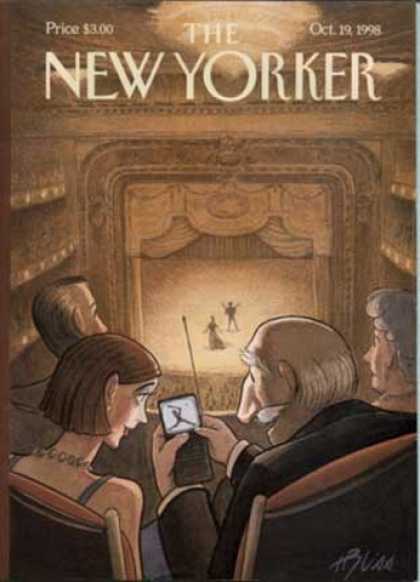
The fourth cover shows a man watching a baseball game on a portable television while he is attending a play. This is a clear representation of disconnection from the life around you. Technology has taken over how we communicate and react to certain situations. The various portable devices that are available to us today have all gained a reputation for catching its user’s attention, to an extent where people can become completely oblivious to their surroundings.


The New Yorker Cover - October 3, 2005 Premium Giclee Print


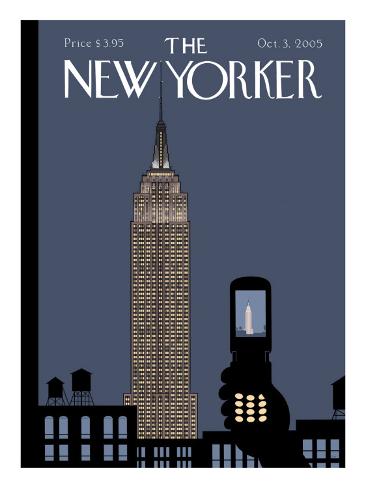
The fifth cover shows the revolutionary cellphone. Cellphones have enabled people to be in touch with every aspect of their lives, with the simple device in the palm of their hands. Many people have become infused with their phones and tend to constantly text, make phone calls, update their social networks, and perform many other tasks. Some people are disconnected with the world around them, because essentially they have the whole world in their hands.


NewYorker_20070514.jpg

My sixth cover of the New Yorker is about a man's obsession with progress and technology. As technology is constantly advancing it seems as if we are struggling to keep up. We are becoming too attached with our devices and eventually we will lose this race. Technology will soon overcome all of our industries and we will need to rely on technology and the money to buy it just to be able to live our lives productively and efficiently.

Sunday, November 6, 2011

Pros of Technology

http://www.advantagesoftechnology.com/

In this article, it discusses how technology has evolved to help us and make our lives easier. In the article, we see how technology has advanced and has only continued to bring about new discoveries in life. Technology has always existed even from the beginning of time, but only in the simplest form of fire, water, air, and earth. These basic elements of life have grown to forge the basic forms of technology that are around us in our everyday lives and have benefited our lives greatly. The article shows us how technology has made life better with such inventions as the wheel, which has been used in inventions like the car. Today, technology is constantly advancing and there are many different forms of technology that exist in our present time. As time passes, we will always have new innovations that help to benefit our daily lives and push forward new and exciting revelations.


http://thebitbot.com/articles/computers-and-technology/how-21st-century-technology-is-shaping-our-lives.html

From “How 21st Century Technology Is Shaping Our Lives”, by Brian Scott, we learn how technology has advanced over the past 10 years. Think back to 2000 and 2001. We didn’t have tablets, intricate cell phones, or even flat screen televisions. Can you even pin point when all these gadgets came into play? It seems as if they just came out of nowhere, and suddenly our industries are swamped with new devices. We are now able to do everything with a simple device in a little amount of time, which used to take a lot more effort back then. The 21st Century brought along the technological revolution, and this revolution will continue to be the driving force of our future because of how fast the industry moves and upgrades. Everything we do, from enjoying our free time to how we communicate with each other has completely changed with the devices and inventions that are available to us today.

Monday, October 31, 2011

Disconnected Urbanism

In the article, "Disconnected Urbanism" by Paul Goldberger, he discusses how people are now becoming disconnected from the world around them now due to the fact of cellphones existing and always being accessible and usable no matter or who we are with. As his article states that people are becoming disconnected from the urban world around them and are being sucked into a virtual world of just communicating through a phone, I do agree with this point to an extent. I agree with this point mainly because people will go around talking on a phone all day if they could and not experience what life has to offer around them. When we are on a phone talking and walking around, we do lose the sense of what's going on around us, which leaves us blind to any potential threat or offer that is happening at that moment in time. As the article states that if you are traveling somewhere like Paris, you would want to experience everything that Paris has to offer you due to the amount of time that you are staying there, but if you were to travel to Paris and be on your cellphone all day, you would not be able to truly live and enjoy the Paris experience. Being on a cellphone all day takes away the experience of living in the sense that we are just walking as if we are zombies who are unaware of what is going on in life around us. The article does make very good points to how our lives are changing due to cellphones, but I do not fully agree with what the author has to say.

I believe that cellphones have helped us in many ways, even though they have changed our lives drastically. In the article, I believe that Goldberger is cursing cellphones and making them seem as if they are useless and not helpful at all, which I believe is not true. Cellphones have allowed us to be able to communicate with someone at any point in time, which can be beneficial in many ways. If there was an emergency going on and you needed to tell someone at that point in time, but you were outside, a cellphone can and would help you since it would always be on you. Another way that cellphones have helped us is that they have allowed for communication with people at any given time with no restrictions put on us. The article does state that we are becoming disconnected from the urban life around us, but it does fail to state that the cellphone has revolutionized life as we know it today. The cellphone can be both beneficial and harmful in many ways as I and the article have stated, however, this is true with anything that is placed in our life.

Sunday, October 30, 2011

Technology- Pros/Cons

Technology may have some amazing effects on our everyday lives. Although technology is very useful to us, there are some down sides to it. Some pros to technology can be the instant access to information that is around us. By using a phone or a computer, we can research what we need to find out or communicate with someone at any moment of the day. Technology can also be a time saver. While using technology we have access to any amount of information and we are able to use this information freely. Technology can help in many aspects of our life, whether it be medical, personal, or social. With the given technology that is around us today, there have been ways to solve issues that were once thought of as unsolvable or simply impossible to achieve. Technology has helped our lives in many ways that we may or may not even notice, but with all the benefits that come from technology, there are some drawbacks to what it can do.

Although technology is useful, it isn’t free. In some cases, technology can be extremely expensive. Also, technology is constantly advancing. Each year comes with new devices, that sometimes make the last editions obsolete. Even though technology has helped to make our lives easier, there are ways that it can make our lives more difficult due to technological failures or trouble with what technology that is available at the time of our circumstance. Other cons to technology can be that it may not accessible to us at all times of the day, or that it is not easily understood by all people. Technology can dramatically change the way certain people live their lives as well. Some people may become too dependent on technology which is never a good situation. To me, technology is more beneficial than it is harmful, however, there are people who believe otherwise due to how technology has heavily impacted our society, but even with that without technology we would not be able to do the many simple things that we do in our everyday lives.

Wednesday, October 26, 2011

New Yorker Cover as a Self Portrait- Paper #2

Each issue from The New Yorker magazine features a different cover from various artists. The publishers chose illustrations that can portray New York City in its current time. The April 30th, 2007 issue with the “Paint by Pixels” cover by Harry Bliss represents the tourist view of New York City and how they perceive things to be. The cover shows how a tourist would view something that they see for the first time. The cover shows a couple that has taken a picture of this bigger picture and have decided to view it on their smaller camera, instead of just looking up at the picture itself. "Paint by Pixels" establishes the idea that not all that we see has the same meaning for everyone; more specifically in the way that which a tourist and a local of the city would view something. “Paint by Pixels” acts as a self-portrait of The New Yorker and its audience because each tourist and local has their own ideas and viewpoints. Just like each New Yorker cover is unique, the audience's view is just as unique as the covers themselves.

“Paint by Pixels” shows two people admiring an art piece in a gallery. The art piece is an abstract painting of splashed colors on a canvas. The colors are vibrant and do not have any specific pattern. The two characters have been drawn with their backs toward the reader, so it is impossible to see their faces and emotions. This leaves us to interpret how they are viewing this artwork. The man in “Paint by Pixels” has taken a photo of the artwork with his camera. Harry Bliss interestingly created the cover with the man and woman reviewing the photograph. This technique of showing the smaller picture in front of the bigger picture shows the general difference between the big picture and the little picture in life. This represents how our views in life are not always right and how we all have different ways of understanding things. With this technique, we see how tourists view life in a new place as what is simply in front of them and they do not realize that there is a bigger, deeper meaning in things than what we simply see right in front of our eyes. The smaller picture on the camera represents the touristic view of things in the city, while the bigger picture represents the common city living view of things in the city. This reveals to us that everyone has a different way of viewing objects and through this interpretation; we all can discover different meanings around us.

Objects in life can be interpreted in many ways. From “Paint by Pixels,” we can see this in the mix of colors in the artwork. The many different colors in the artwork can represent the many different views that people have of the city. The bigger picture of the artwork can represent how the people of the city view New York City since there are many people who live in the city and have strong view points on how they interpret the city. The photograph on the camera can represent how a tourist views the city, since their interpretation won't be as strong when compared to a common city living person. “Paint by Pixels” also reveals a sort of humorous view of tourists, since they are deciding to view such a big piece of artwork on such a small tiny camera. This can be a representation of how a tourist is so fascinated with such small minimal things that a local would find so common and regular throughout their day.

The July 5th, 1999 issue features another piece from Harry Bliss. On this cover we see a celebration along the darkened New York City skyline. The fireworks from this illustration represent a time of happiness for New Yorkers, considering the issue was released a day after Independence Day. On the rooftops you can see people enjoying the show, and even a couple kissing which I believe is important when in relation to “Paint by Pixels.” Both covers’ show couples who are enjoying something that is right there in front of them. However, the most important thing to note from this cover is the man sitting in his apartment. This man chose the alternate way to watch the firework display on his television, rather than enjoying the show on his rooftop. This supports the idea of the tourism versus local view of events around the city. A tourist would be so fascinated by this whole July 4th experience around the city, but to a local this would be nothing as serious due to the fact that they are there every year for the display. The people on the rooftops relate to the "Paint by Pixels" couple, in the way that they are viewing this display of art, the fireworks. However, the man sitting alone relates to the couple more due to the way that they are deciding to view what is in front of them. They both have decided to take this big picture and minimize it into something smaller than what it really is, which can lead to them not seeing the true meaning of what is front of their face.

The article I decided to use to tie the readers to the cover is the picture of the two fish on the bottom left corner of page 46. In this picture we see two fish; one big fish with hidden agenda written on it and a smaller fish with agenda written on it. We can also see how the bigger fish is trying to eat the smaller fish. To me, this represents how the bigger picture is always there, but hidden because we only notice the smaller picture in front of us. This ties into the cover with the couple looking at the smaller version of the artwork on the camera instead of looking at the bigger picture that is right in front of them. This relates to how we view things and our perception of things in the world. We all choose to see things how we want to in life and we all have different views. This is represented in how the covers depict how people decide to look at what’s in front of them. There will always be a bigger picture in front with a "hidden agenda", but what we actually see and decide to believe becomes the "agenda” that we follow.

Harry Bliss’ New Yorker covers reveal a sense of togetherness, a diverse community of tourists and locals living in the city, and an idea of a picture much larger than we realize. Harry's art reveals a way to distinguish the difference between the touristic view and the local view of the city. There are many different types of people in New York City, and through Harry’s covers we can see that he indicates this fact through the emotions and actions that his characters portray. Through his covers, Harry shows that there are two types of people who occupy the city, the local and the tourist, and that they both have their own viewpoints. But in the end these two types of people come together to make up the great city that is New York City.

Tuesday, October 25, 2011

Revision #3- Paper #2

Each issue from The New Yorker magazine features a different cover from various artists. The publishers chose illustrations that can portray New York City in its current time. Harry Bliss is a talented artist with many years of experience that creates many of this magazine’s covers. The April 30th, 2007 issue with the “Paint by Pixels” cover by Harry Bliss represents the tourist view of New York City and how they perceive things to be. The cover helps develop an interest in how a tourist would view something that they see for the first time, as opposed to the local city living person due to the interest the couple shows when they view the art piece in their camera. The cover shows us a piece of artwork as a bigger picture and then shows a couple who have taken a picture of this big picture and have decided to view it on their smaller camera. "Paint by Pixels" establishes the idea that not all that we see has the same meaning for everyone, it allows us to see that everything in life is truly unique and that we all have different view points. “Paint by Pixels” acts as a self-portrait of The New Yorker and its audience because each reader has their own ideas and view points, just like each New Yorker cover is not the same as the last. Each issue itself has its own representation of New York City, and of its audience, but just as each cover is unique, the audience's view is as unique as the covers themselves.

“Paint by Pixels” shows two people admiring an art piece in a gallery. The art piece is an abstract painting of splashed colors on a canvas. The colors are vibrant and do not have any specific pattern. The two characters have been drawn with their backs toward the reader, so it is impossible to see their faces and emotions, which leaves us to interpret how they are viewing this artwork. The man on “Paint by Pixels” has taken a photo of the artwork with his camera. Harry Bliss interestingly created the cover with the man and woman reviewing the photograph. This technique of showing the smaller picture in front of the bigger picture shows the general difference between the big picture and the little picture in life. This represents how our views in life are not always right and how we all have different ways of understanding things. With this technique, we see how tourists view things as whats simply in front of them and do not realize that there is a bigger deeper meaning in things than what we simply see right in front of our eyes. The smaller picture on the camera represents the touristic view of things in the city, while the bigger picture represents the common city living view of things in the city.

Things in life can be interpreted in many ways. From “Paint by Pixels,” we can see this in the mix of colors in the artwork. The many different colors in the artwork can represent the many different views that people have of the city. The bigger picture of the artwork can represent how the people of the city view New York City since there are many people who live in the city and have strong view points on how they interpret the city. The photograph on the camera can represent how a tourist views the city, since their interpretation won't be as strong when compared to a common city living person. The two people on the cover can be viewed as tourists since they have taken a picture of the artwork instead of viewing the bigger piece in front of them. “Paint by Pixels” also reveals a sort of humorous view of tourists, since they are deciding to view such a big piece of artwork on such a small tiny camera. This can be a representation of how a tourist is so fascinated with such small minimal things that a local would find so common and regular throughout their day.

The July 5th, 1999 issue features another piece from Harry Bliss. On this cover we see a celebration along the darkened New York City skyline. The fireworks from this illustration represent a time of happiness for New Yorkers, considering the issue was released a day after Independence Day. On the rooftops you can see people enjoying the show, and even a couple kissing which I believe is important when in relation to “Paint by Pixels.” Both covers’ show couples who are enjoying something that is there in front of them. However, the most important thing to note from this cover is the man sitting in his apartment. This man chose the alternate choice to watch the firework display on his television, rather than enjoying the show on his rooftop. This supports the idea of the tourist versus local view of events around the city. A tourist would be so fascinated by this whole July 4th experience around the city, but to a local this would be nothing as serious due to the fact that are there every year for that event. The people on the rooftops relate to the "Paint by Pixels" couple, in the way that they are viewing this display of art, the fireworks. However, the man sitting alone relates to the couple more due to the way that they are deciding to view what is in front of them. They both have decided to take this big picture and minimize it into something smaller than what it really is, which can lead to them not seeing the true meaning of what is front of their face.

The article I decided to use to tie the readers to the cover is the picture of the two fish on the bottom left corner of page 46. In this picture we see two fish; one big fish with hidden agenda written on it and a smaller fish with agenda written on it. We can also see how the bigger fish is trying to eat the smaller fish. To me, this represents how the bigger picture is always there, but hidden because we only notice the smaller picture in front of us. This ties into the cover with the couple looking at the smaller version of the artwork on the camera instead of looking at the bigger picture that is front of them. This relates to how we view things and our perception of things in the world. We all choose to see things how we want to in life and we all have different views. This is represented in how the covers decide to depict how people decide to look at what’s in front of them, there will always be a bigger picture in front with a "hidden agenda", but what we actually see and decide to believe becomes the "agenda” that we follow.

Harry Bliss’ New Yorker covers reveal a sense of togetherness, a diverse community among the people, and an idea of a picture much larger than we realize. Harry's art reveals a way to distinguish between the tourist view and the local view of the city. There are many different types of people in New York City, and through Harry’s covers we can see that he indicates this fact through the emotions and actions that his characters portray. Through his covers, Harry shows that there are two types of people who occupy the city, the local and the tourist, and that they both have their own viewpoints, but in the end these two types of people come together to make up the great city that is, New York City.

Tuesday, October 18, 2011

Revision Paper #2- 2nd Draft

Each issue from The New Yorker magazine features a different cover from various artists. The publishers chose illustrations that can portray New York City in its current time. Harry Bliss is a talented artist with many years of experience that creates many of this magazine’s covers. The April 30th, 2007 issue with the “Paint by Pixels” cover by Harry Bliss represents the artistic industries of New York City. The cover helps develop an interest in art when seen because of the interest the couple shows when they view the art piece. "Paint by Pixels" establishes the idea that everything an artist creates truly is art, no matter how it is viewed and by who it is viewed by. “Paint by Pixels” acts as a self-portrait of The New Yorker and its audience because readers are inspired from the work found within the magazine as well as anything they may come across every day of their lives, exactly like the couple who are viewing this art piece and find some sort of inspiration from it.

“Paint by Pixels” shows two people admiring an art piece in a gallery. The art piece is an abstract painting of splashed colors on a canvas. The colors are vibrant and do not have any specific pattern. The two characters have been drawn with their backs toward the reader, so it is impossible to see their faces and emotions. The man on “Paint by Pixels” has taken a photo of the artwork with his camera. Harry Bliss interestingly created the cover with the man and woman reviewing the photograph. This artistic technique shows the general difference between the big picture and the little picture in life. The smaller picture on the camera represents how we view something without actually seeing the whole picture right in front of us.

Things in life can be interpreted in many ways. From “Paint by Pixels,” we can see this in the mix of colors in the artwork. The photograph on the camera may indicate that the two characters are tourists because the art piece has some significance to the two characters that would not nearly have the same effect on any other individual. “Paint by Pixels” also reveals the theory that not one idea is less important that another. We can see this theory in the artwork itself, because not one color overpowers the next.

The July 5th, 1999 issue features another piece from Harry Bliss. On this cover we see a celebration along the darkened New York City skyline. The fireworks from this illustration represent a time of happiness for New Yorkers, considering the issue was released a day after Independence Day. On the rooftops you can see people enjoying the show, and even a couple kissing which I believe is important when in relation to “Paint by Pixels.” Both covers’ couples are enjoying something that is there in front of them. However, the most important thing to note from this cover is the man sitting in his apartment. This man chose the alternate choice to watch the firework display on his television, rather than enjoying the show on his rooftop.

It is ironic in “Paint by Pixels” that the two characters were so interested in that one piece of work. They were enveloped enough to take a picture and marvel over the photograph while standing directly in front of the art piece. The man in his apartment from the cover with the skyline is enjoying the display from his television while there is an entire celebration right above him. This is significant because these two acts present the idea that New Yorkers run into conflict when looking at their future. Instead of seeing the big picture as it is laid out in front of us, we are seeing everything as if we are unaware of our future. Does Harry Bliss believe that New Yorkers are slightly ignorant and have trouble planning ahead?

The August 5th, 2005 issue has an extremely complex illustration by Bliss. On this cover, we see King Kong towering over the New York City skyline and its citizens, spraying them with a super soaker water gun. The interesting image to note is that the citizens are celebrating! Not a single character on this cover is afraid, and that inferences that New Yorkers generally create a city of happiness. The colors in this illustration are vibrant and excited.

Through his many covers, Harry Bliss creates a portrait of New York City showing that its population is united. New Yorkers always come together during a time of happiness and even during times of sorrow. Bliss shows through his choice of colors that New Yorkers are a diverse and creative mix of people. No two people are the same, and this is expressed as no two covers from Bliss are the same. Bliss’ covers however are all related under a single note, which is the freedom to express oneself. Harry Bliss successfully shows that every single New Yorker is different, but that every person in New York create the unique city that it is today.


Harry Bliss’ New Yorker covers reveal a sense of togetherness, a diverse community among the people, and an idea of a picture much larger than we realize. Harry creates a New York portrait of a strong group of people that unite for almost any circumstance. There are many different types of people in New York city, and through Harry’s covers we can see that he indicates this fact through the emotions and actions that his characters portray. Through his covers, Harry shows that there are many different neighborhoods in New York City, but in the end they all come together to forge one great city.

Sunday, October 16, 2011

Paper #2- First Draft

The New Yorker issue with the “Paint by Pixels” cover by Harry Bliss represents the cultural and artsy industries in New York City. This magazine showcases literary works of writers such as short stories and essays, whether they are famous or not. Readers of The New Yorker would generally be aspiring authors, journalists, artists, and tourists. “Paint by Pixels” shows an art piece on display with two people viewing it, and one of the characters was inspired enough to take a picture of it. “Paint by Pixels” acts as a self-portrait of The New Yorker and its audience because readers are inspired from the work found within the magazine. My cover shows the relationship between inspirations from an external source.

“Paint by Pixels” shows two people admiring an art piece in a gallery. The art piece is an abstract painting of splashed colors on a canvas. The colors are vibrant and do not have any specific pattern. The two characters have been drawn with their backs toward the reader, so it is impossible to see their faces and emotions. The man on “Paint by Pixels” has taken a photo of the artwork with his camera. Harry Bliss interestingly created the cover with the man and woman reviewing the photograph.

Things in life can be interpreted in many ways. From “Paint by Pixels,” we can see this in the mix of colors in the artwork. The photograph on the camera may indicate that the two characters are tourists because the art piece has a significance to the two characters that would not nearly have the same effect on any other individual. “Paint by Pixels” also reveals the theory that not one idea is less important that another. We can see this theory in the artwork itself, because not one color overpowers the next. The smaller picture in the camera can represent how we view something without actually seeing the whole picture right in front of us.

Harry Bliss’ New Yorker covers reveal a sense of togetherness, a diverse community among the people, and an idea of a picture much larger than we realize. Harry creates a New York portrait of a strong group of people that unite for almost any circumstance. There are many different types of people in New York city, and through Harry’s covers we can see that he indicates this fact through the emotions and actions that his characters portray. Through his covers, Harry shows that there are many different neighborhoods in New York City, but in “The Skyline”, there is only just one big city.

Wednesday, October 12, 2011

Midterm- "The City" cover

“The City” by Eric Drooker portrays New York City with an industrial and somewhat desolate image. This cover features a bull at the highest point in the skyline, which represents who currently has the most power in the city. The dull aspects and pollution within the image represent the unrest and flaws that are presently burdened upon the city. Some problems that currently exist in New York City are the Wall Street protests and marches, political corruption, the state of the economy, pollution, the low employment rates, and the rising homeless rates. “The City” illustrates some interesting but hidden messages. The cover shows that there is a higher power over the general population, and this shows that the lesser people don’t have a voice in any of the decisions that are being made.

On the cover of “The City”, we see a dark city that is extremely polluted and has industrial themes. The buildings all around have no lights on in them and they all appear to be factory like buildings with no one working or living in them. The smoke coming up from the buildings can represent how dirty the business world is becoming and how many people have no job or any type of steady income. In the picture we do not see anything living there, the only thing that we can see as a form of life is a bull that is centered and high up above all the other buildings on the cover. The stairs that lead up to the bull can represent how someone rises to power and becomes superior above everyone else, which then leaves everyone else at the bottom to suffer and fend for themselves. The area where the bull is located appears to be much brighter and cleaner than the buildings on the lower level. This can represent how someone of a higher class has a better standard of living than people of a much more lower class. This cover to me represents how the world is slowly becoming a corrupt and industrial based society.

The Occupy Wall Street campaign started just over three weeks ago and has grown in mass numbers since then. Protests all over the country soon began to rally after the demonstration in New York began to grow numbers. People gathered together to object how money is being spent for company bailouts rather than to satisfy the needs of the general people. Occupy Wall Street represents the general people, the population that does not own most of this nation’s wealth. However, gatherings do not go unnoticed. The location of the congregation is under strict supervision of the NYPD. Any signs of disrespect or anything that displeases the NYPD will result in arrest. Since the campaign began, the NYPD has arrested over 800 protesters; most of which were completely innocent. This shows corruption in the form of police bestiality. The protesters are being discriminated against for simply showing their opinions, but the NYPD is merely taking away their voices. The general people are demanding a “reset” on the banks and loan systems, proper health care benefits, and money to fund the various efforts in the country to help lower the standard of living. The campaign is also against the corruption among the politicians of our country as they continuously make decisions that benefit only those of higher wealth.

New York City seems to be heavily affected with the state our economy is in. The prices for pretty much everything has definitely gone up since 2000 and New Yorkers especially are having a hard time managing our funds and having a good standard of living. Taxes have also gone up and the banks have begun to limit their loans to the citizens. The general population has a much lesser amount of money to spend than the previous decades. This leads to the homeless rates being on the rise in New York City, and the unemployment rates support this. People are losing their homes and jobs constantly and this ultimately is bringing our economy down. On top of this, rent has gone up as well as real estate and mortgages which make it extremely difficult to find housing in New York City for those with low incomes.

The New Yorker features covers from various artists in which they illustrate their personal view on how New York City is at the time. The New Yorker is a magazine based on the opinions of the writers and artists as well as the articles in the issue. Any current event can influence the writers and artists to work on their own specific item in the issue. As the city grows and changes, it is the duty of the writers and the artists of The New Yorker to help create an issue that can be easily related to the audience. The readers can gain knowledge on current events within the city and even help create a larger community among the populace of New York City.

Sunday, October 2, 2011

The Reader of the New Yorker

The kind of reader I think that is constructed by the cover of my New Yorker is either a tourist or an artist. I believe a tourist because it seems that they are in an art museum looking at this painting that they have never seen before and they then take a picture of it since they seem to like it. It can also be an artist because they could use the painting as an inspiration for one of their works. An article that can support this tourist or artist audience is page 8 “Goings On About Town”, which states many things that are going on around town. It talks about events in the night, and events in art, dance, classical music, and movies. These appeal both to tourists and artists because they are things that these kind of people would want to do when they are visiting a new place. Then on pages 9-12 it shows a spring-summer cultural calendar with events that are in different places where tourists might want to visit if they found out about these events. Then on the other pages it shows theatre and critic’s notebook talking about movies and a song by Natasha Bedingfield, this would appeal to an artist in any type of media area. This cover and magazine article appeals to an artist than a tourist to me mainly because of all the events that are mentioned in the “Going On” section.